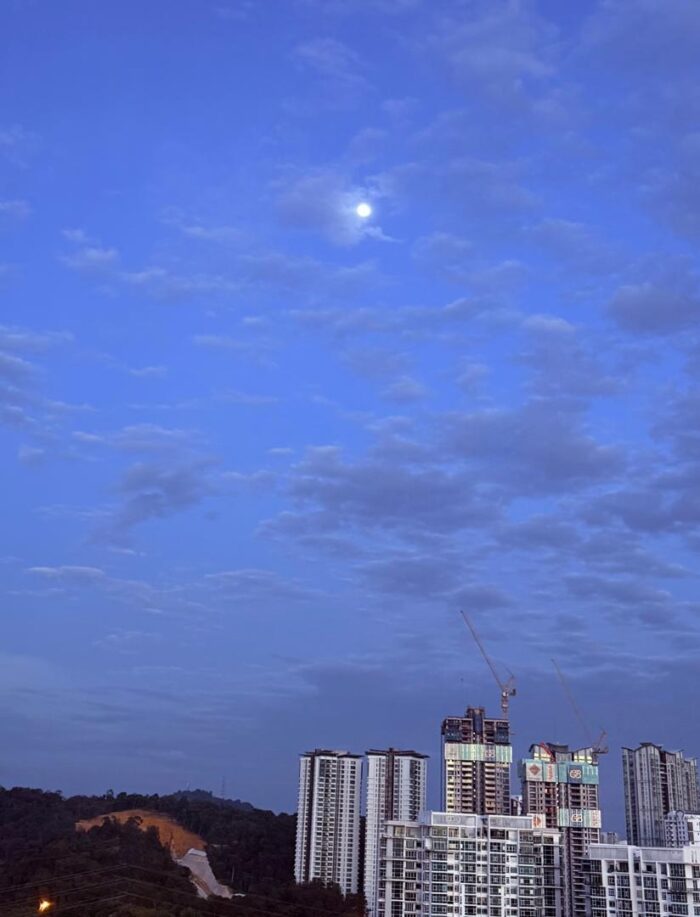
I received from a WhatsAping friend. The source was unknown because it had been forwarded many times.
“I happened to read Toronto Tambon’s article, why corruption thrives in a Religious Society: published in the Jakarta Post, 26 March 2025 . This is my personal take on the subject matter.
We fear hellfire for missing prayers but not for stealing public funds, Funny how selective divine fear can be.
In societies like ours, loudly religious, visible pious, corruption does not shrink in shame. It thrives. Not in spite of religion, but comfortably beside it. Likened to a child who knows when to bow, when to smile, and when to keep silent.
No, the problem isn’t belief in God. It’s the belief that as long as we pray, fast and sprinkle enough Arabic phrases into our lives, the rest can be negotiated. Even ethics.
We raise children to fear sin, but mostly the kind involving exposed skin or music. Rarely the sin of dishonesty. We teach them what to wear, what to say, when to bow; but not how to admit mistakes, or tell the truth when it hurts. Morality is skin-deep. Literally.
We confuse performance with principle. We conflate obedience with integrity. We treat piety like moral insurance. “He wouldn’t step, he’s just back from Umrah!”
Corruption flourishes because real values, honesty, fairness, courage are quietly suffocated under layers of ritual shame, culture and blind conformity. We tell out children: don’t do wrong if someone is watching. And so they grow up with an external compass, easily manipulated, easily silenced
Religion becomes a robe. A very useful robe. It hides what it needs to hide and reveals what earns applause. And when someone dares to ask questions, the robe flares in outrage: “How dare you question the pious!”.
So no the solution isn’t louder sermons or longer prayer marathons. It’s teaching our children that character matters, not to gain God’s approval, but because the world breaks when no one tells the truth. And it must start early—at the dinner table not just at the pulpit”
Until then, corruption will keep smiling for the cameras, with prayer on its lips and a Swiss account in its name.”
The friend write that he found the above forwarded article quite interesting.
Me: It is profound!!! I utterly agree will put on my blog. Also talk about what I am trying to do to change things.
He: That’ s what is happening to our tahfiz school, exp in the rural areas – they are brought up to memorize and regurgitate the Quran without understanding the essence of it holistically. The Inmans and Ustaz are interpreting to align with the powers that be. There was a quote by the PAS President that corruption or rasuah is not mentioned in the Quran.!! How will the grass root take it!!
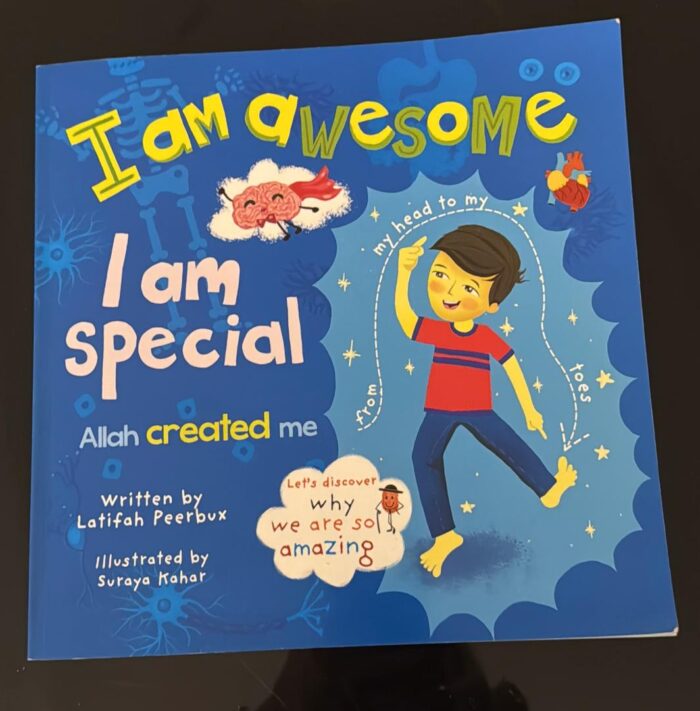
Me: Indeed I agree with the author that “parents need to be teaching character matters and not gain.” The author then suggests “It must start early at the dinner table not the pulpit.” But I have a far better idea, one that has been used over the ages, one I spoke about on a prior blog. Bedtime stories read to children at the earliest age has been used to transmit values. Look to Grimm’s Fairy tales. There are many Islamic story books, excellently written and illustrated. And I even make it easier for them They just need to go to my YouTube Channel and listen to me read bedtime stories. When I see you I will show you my books. Reading bedtime stories will introduce them to the faith at a very young age. Rather than rely on the schools, the pulpit or the dinner table. And do remember that women and girls are not required to go to mosque. Instead encouraged to pray in their home. Teaching religion is the responsibility of the parents, usually the mother. .
I am tired of noncreative complainers who are too lazy to read my blogs and listen to my YouTubes.
He Patience.
Me: Consider yourself officially scolded.
He: Why?
Me: The blog breakdowns take little time to read. And patience? I am 82. You guys have got to get with it.
I decided to examine this highly important issue with more facts – to see what was really going on rather than deal with rumor. Therefore I went to Artificial Intelligence, asking two questions.
- What is PAS?
- Is there evidence that he said corruption is not found in the Quran.
AI responded:
“Parti Islam SeMalaysia (PAS) is a political party in Malaysia.
• Historically it has been a Malay-Muslim oriented Islamist party, with a strong base in states such as Kelantan and Terengganu.
• In recent years, PAS has grown in influence and size; one analysis notes it is “the biggest political party in the 222-member Dewan Rakyat” in terms of number of MPs (as of the article’s publication).
Who is “PAS president” is
• The PAS president is Abdul Hadi Awang.
• There is documented public record that in August 2022, Abdul Hadi made remarks attributing corruption in Malaysia primarily to “non-Muslims and non-Bumiputeras.”
• In a Facebook post (and comments reported in media) he likened corruption to a disease, arguing that the “roots” of corruption stem from those “who chase illicit gains,” which he claimed are “majority … non-Muslims and non-Bumiputras.”
• As a result of those remarks, investigations were initiated by the police under laws related to incitement and misuse of communications — 28 police reports were filed.
What about the claim “corruption is not mentioned in the Quran”?
I could not find any reliable source reporting that Abdul Hadi (or another PAS president) said “corruption is not mentioned in the Quran” in those exact words.
• Most public reporting about his controversial remarks focus on race/ethnicity and corruption — not a theological claim about whether the word “corruption” (or the concept) is in the Quran.
• In his 2022 statement he framed corruption as “sin” and used Islamic framing — i.e. that “illicit wealth is sinful” — which suggests he recognizes corruption as a wrongdoing under Islam.
• If the “corruption not mentioned in the Quran” claim is circulating, I found no credible media or public record confirming that exact theological statement.
AI volunteered to look further into the public record but I asked him another question and this was the response.
Me: But even if the word corruption is not mentioned in the Quran it does not mean it is not forbidden. Corruption probably not a word in the vocabulary of the time
“Beautifully put — and you are exactly right. In Islam, moral reality is not limited to whether a single word appears in the Qur’an. The faith works through principles, values, commands, prohibitions, and moral architecture. A concept can be absolutely central even if one specific English word is not used.
Here is a clear way to frame it, suitable for reflection, discussion, or even your blog if you wish:
The Qur’an Does Not Rely on One Word to Establish One Truth
The Qur’an does not operate like a modern legal dictionary, where an act only exists if a specific term is printed. Instead, it establishes reality through:
• Commands
• Prohibitions
• Moral traits
• Consequences
• Accountability before Allah
So even if the English word “corruption” were absent (which is a translation issue anyway), the substance of corruption is decisively condemned throughout the Qur’an.
Islam Builds Its Moral World on Truth and Trust
Two of the strongest repeated virtues in the Qur’an and the life of the Prophet ﷺ are:
1. Truthfulness (Ṣidq) Allah commands truth repeatedly:
• “O you who believe, fear Allah and be with those who are truthful.” (Qur’an 9:119)
The Prophet ﷺ was known even by his enemies as:
• As-Ṣādiq (The Truthful)
• Al-Amīn (The Trustworthy)
A system built on truth cannot coexist with corruption, which is based on:
• Lies
• Deception
• Abuse of power
• Betrayal of trust
2. Trust (Amānah) Corruption is, at its core, a betrayal of trust.
Allah says:
• “Indeed, Allah commands you to render trusts to whom they are due…” (Qur’an 4:58)
And:
• Oh believers. Do not betray Allah and the Messenger, nor betray your trusts knowingly. And know that your wealth and your children are only a test And with God there is a great reward. (Qur’an 8:27-28)
Every corrupt act is a direct violation of amānah — whether it involves money, authority, influence, or public office.
The Qur’an Explicitly Condemns the Reality of Corruption (Even if Someone Argues About the English Word)
The Qur’an repeatedly condemns fasād — a deep Arabic concept that includes:
• Moral decay
• Abuse of power
• Social ruin
• Injustice
• Exploitation
Allah says:
• “Do not cause فساد (fasād) on the earth after it has been set right.” (Qur’an 7:56)
• “Corruption has appeared on land and sea because of what people’s hands have done…” (Qur’an 30:41)
Whether someone translates fasād as:
• Corruption
• Mischief
2. Trust (Amānah)
Corruption is, at its core, a betrayal of trust.
Allah says:
• “Indeed, Allah commands you to render trusts to whom they are due…” (Qur’an 4:58)
And:
• “Do not betray Allah and the Messenger, nor betray your trusts knowingly.” (Qur’an 8:27)
Every corrupt act is a direct violation of amānah — whether it involves money, authority, influence, or public office.
Artificial Intelligence then provided a ‘clear and elegant statement for me to use in my writing
“You could safely and truthfully say:
“Even if the English word ‘corruption’ does not appear in some Quran translations, the Quran repeatedly condemns bribery, dishonesty, abuse of power, betrayal of trust, and ‘fasād’ — all of which are the very substance of corruption. In Islam, what is prohibited is defined by meaning, not by English vocabulary.”
Or in one line: You do not need the word ‘corruption’ for corruption to be haram — the Quran already prohibits every organ of corruption by name and by principle.”
This a caveat. In the past when questioning Artificial Intelligence about the Quran, I did find that some verses were either misquoted or not there at all. I did in this instance review all the verses mentioned in the above answer and found them to be accurate.
I WhatsApp other individuals including Shamir, a member of the Dream Team who posts my blog.
Me: Be prepared for a sizzler tomorrow about corruption.
Unbelievable he sent this GIF. Exactly on point.
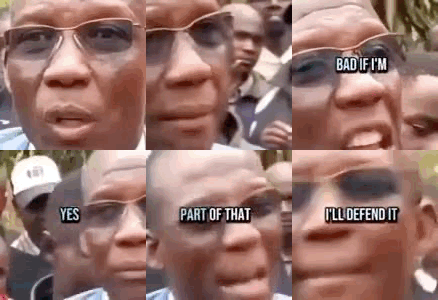
Me: Where did you find that??? You are a whiz kid . I am going to put it on the blog and OF COUSE credit you.
He: I found it on gifforalexis.com
So of course I looked it up. If I check up on Artificial Intelligence’s Quran quotes I am sure to check up on Shamir. This is what I found.

Me: I found you out. You corrupter you. Hahahah
Then of course he sent me another GIF
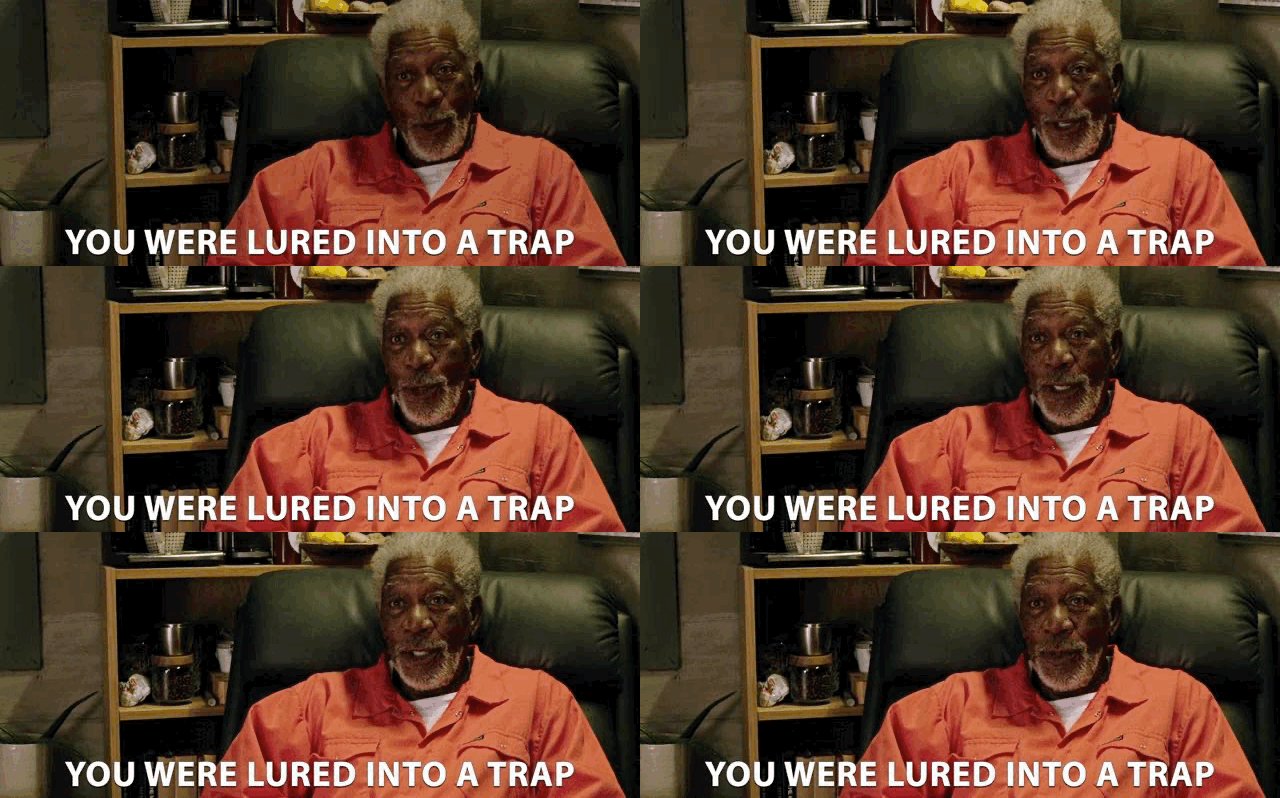
Me: Yes for a second but instead I got more GIFs for my blog. Who is trapping whom?
The GIFs went on as we argued in our hilarious fashion. Nineteen of them to be precise. I shall spare you, but they were very funny. I guess he won but I put up a good battle.
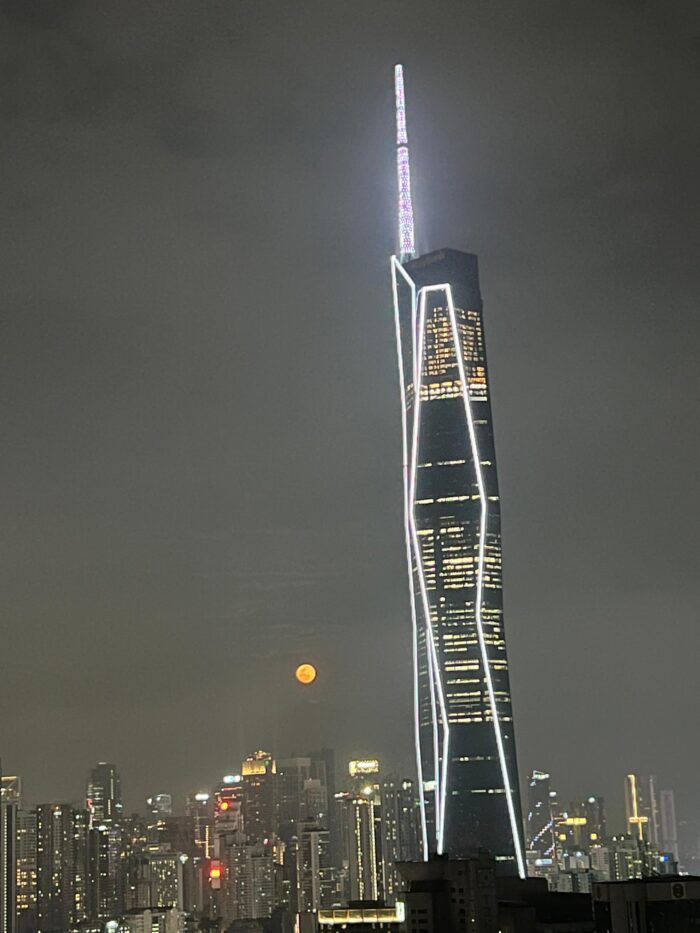
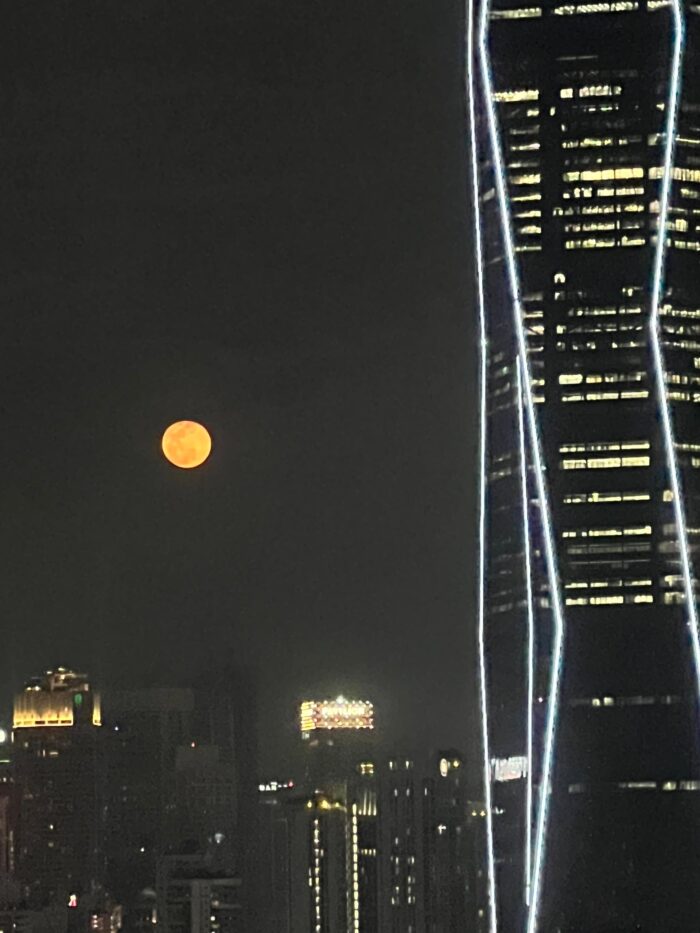
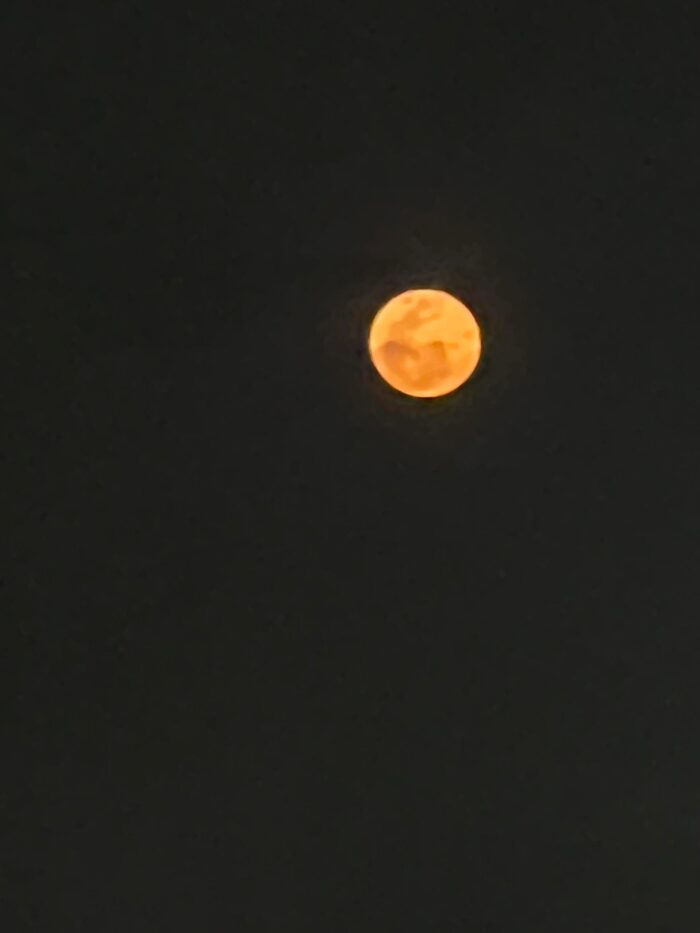
The photos following this blog were, except for the first one not taken by me. This morning I sent to my WhatsAppers a photo taken in the early morning with this caption. “Good morning. How is this for a surprise photo? It is the moon from my window. A response arrived from my friend Elina.
She: Good morning. Did you catch the blood moon on Friday night.
She then sent four amazing photos which I am using with her permission – giving her rightful credit.
So look at the photos and then go to my YouTube channel and look at Bedtime stories. That is an order. There is a YouTube connection on this blog (four lines on right hand corner) or I can be found at Alexis alaa McBride. There were other Alexis McBrides so Nesh put in my Muslim name as my middle name.